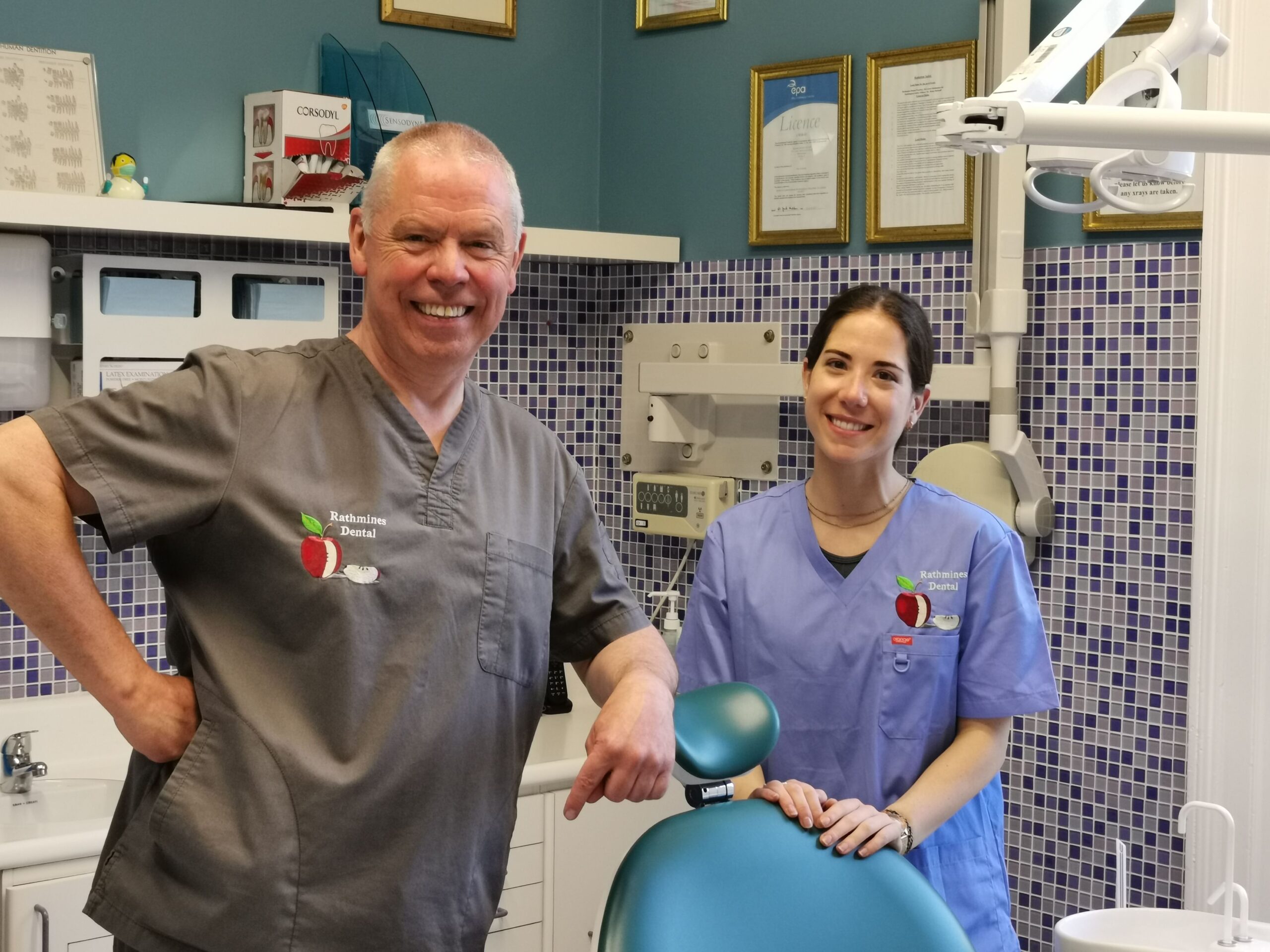
Dental examination
A thorough check of every tooth for decay, broken or worn fillings and fractures, of your gums for signs of gum disease, and of your whole mouth for any sign of oral cancer. If braces or a cosmetic treatment could help you, Brian will say so.
Children’s dentistry
Check-ups for children focus on preventing problems before they start. A tip from the practice: tell your child the dentist is going to count their teeth, and if they’re shy, bring their toothbrush so they can show how well they brush.
A child’s examination and clean (under 16) is €100.
Dental hygienist
Plaque hardens into tartar, like scale in a kettle, especially behind the lower front teeth. Lynne’s cleanings every six months stop it doing damage. Her advice: brush three times and floss once a day, with a soft or medium brush with a compact head.
Fillings
A filling replaces part of a tooth lost to decay or damage. Front teeth always get white fillings; for back teeth Brian will talk you through white and metal options and how they compare on strength, look and cost. The sooner decay is treated the better: it usually doesn’t hurt until it’s close to the nerve.
Root canal treatment
Cleaning out, disinfecting and sealing the inside of a tooth whose nerve has died or become infected, usually over two visits, with plenty of local anaesthetic. It’s a fiddly job but not a painful one, and it can save a tooth that would otherwise need to come out. A tooth that’s had root canal treatment often needs a crown afterwards to protect it.
Crowns
When there isn’t enough tooth left to fill, a crown made in a dental laboratory rebuilds it to its proper size, shape and colour. Crowns last a long time: 15 to 20 years on average.
Bridges
A bridge replaces a missing tooth with a fixed (not removable) one, made in a lab from impressions of your teeth over a few visits, with a temporary in the meantime.
A short summary for this concept site. The practice’s full patient information moves across word for word when the new site goes live.